
What Is a Ring Magnet and How Does It Work in Modern Industrial Applications
A Ring Magnet is one of the most versatile magnetic components used across modern industries, from electric motors and automotive sensors to medical devices and renewable energy systems. Despite its simple donut-like geometry, the ring magnet plays a critical role in improving efficiency, stability, and precision in complex assemblies. This in-depth guide explains what a ring magnet is, how it works, the materials used, manufacturing processes, application scenarios, and how to select the right ring magnet for your project.
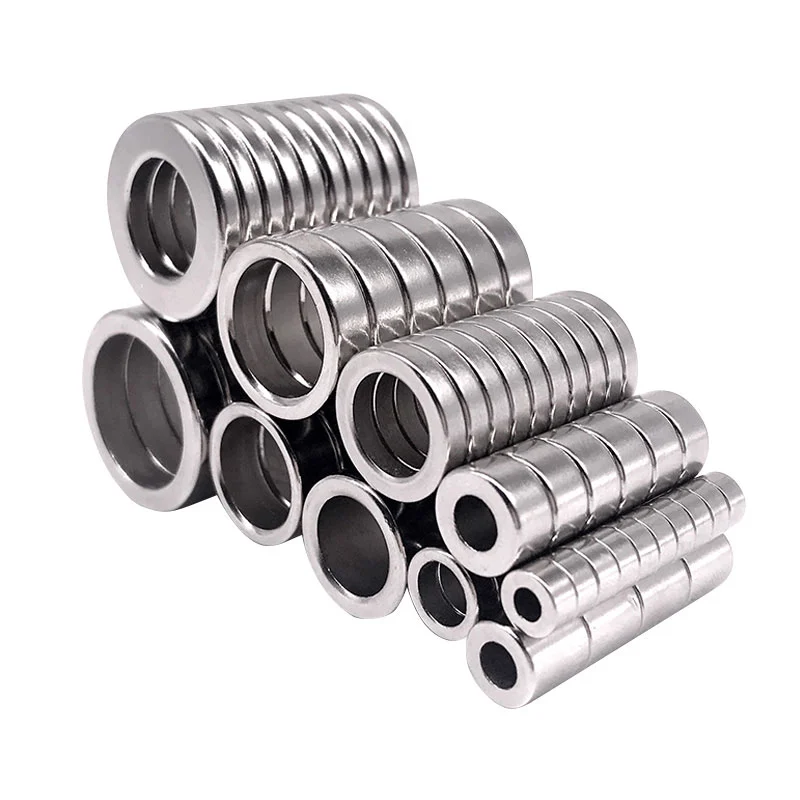
Table of Contents
- What Is a Ring Magnet?
- How Does a Ring Magnet Work?
- Common Materials Used in Ring Magnets
- How Are Ring Magnets Manufactured?
- Magnetization Directions Explained
- Industrial Applications of Ring Magnets
- Advantages of Using Ring Magnets
- How to Choose the Right Ring Magnet
- Quality Standards and Reliability
- Frequently Asked Questions
1. What Is a Ring Magnet?
A Ring Magnet is a circular magnet with a hole in the center, forming a ring or annular shape. This geometry allows it to be mounted on shafts, rods, or bearings, making it ideal for rotational systems. Ring magnets can be axially magnetized (north and south poles on flat surfaces) or radially magnetized (poles on the inner and outer diameter).
Due to its balanced magnetic field distribution and mechanical symmetry, the ring magnet is widely used in applications that demand rotational stability, minimal vibration, and efficient magnetic flux control.
2. How Does a Ring Magnet Work?
The working principle of a ring magnet is based on magnetic flux circulation around its closed-loop structure. When magnetized, magnetic field lines emerge from the north pole and re-enter at the south pole, creating a controlled and predictable magnetic field.
- Axial magnetization generates magnetic force along the axis
- Radial magnetization creates circumferential magnetic fields
- Multi-pole magnetization improves signal resolution in sensors
This makes ring magnets especially suitable for motors, encoders, and precision measurement systems.
3. Common Materials Used in Ring Magnets
| Material | Magnetic Strength | Temperature Resistance | Typical Applications |
|---|---|---|---|
| Neodymium (NdFeB) | Very High | Up to 200°C | Motors, sensors, robotics |
| Ferrite (Ceramic) | Moderate | Up to 250°C | Speakers, household devices |
| Samarium Cobalt | High | Up to 350°C | Aerospace, military |
| Alnico | Low to Medium | Up to 500°C | Instrumentation |
Among these, neodymium ring magnets offer the highest energy density and are the most commonly used in high-performance applications.
4. How Are Ring Magnets Manufactured?
The manufacturing process of a ring magnet depends on the material but generally involves the following steps:
- Raw material preparation and alloy melting
- Powder milling and orientation
- Pressing or sintering into ring shape
- Precision machining and grinding
- Surface coating for corrosion protection
- Final magnetization
Advanced manufacturers such as ZHAOBAO MAGNET GROUP implement strict quality control at every stage to ensure consistency, magnetic performance, and long-term reliability.
5. Magnetization Directions Explained
- Axial Magnetization: Poles on flat surfaces
- Radial Magnetization: Poles on inner and outer diameter
- Multi-pole Magnetization: Alternating poles around circumference
Selecting the correct magnetization direction is critical for achieving optimal performance in encoders, motors, and magnetic couplings.
6. Industrial Applications of Ring Magnets
- Brushless DC motors
- Automotive ABS and speed sensors
- Medical imaging equipment
- Wind turbines and renewable energy systems
- Magnetic bearings and couplings
For detailed product specifications, you may refer to Ring Magnet technical reference.
7. Advantages of Using Ring Magnets
- Uniform magnetic field distribution
- Easy shaft mounting
- High efficiency in rotational systems
- Compact design with high energy output
8. How to Choose the Right Ring Magnet
When selecting a ring magnet, consider:
- Operating temperature
- Required magnetic strength
- Environmental conditions
- Dimensional tolerances
- Magnetization pattern
9. Quality Standards and Reliability
High-quality ring magnets must comply with international standards such as ISO 9001 and IATF 16949. Experienced suppliers like ZHAOBAO MAGNET GROUP ensure traceability, stable magnetic performance, and long service life.
Frequently Asked Questions (FAQ)
Q1: What is the strongest type of ring magnet?
Neodymium ring magnets provide the highest magnetic strength.
Q2: Can ring magnets be customized?
Yes, dimensions, coatings, and magnetization can all be customized.
Q3: Are ring magnets suitable for outdoor use?
With proper coating such as nickel or epoxy, they can withstand harsh environments.
Final Thoughts
The ring magnet remains an indispensable component in modern engineering and industrial design. Choosing the right material, magnetization, and manufacturing partner can significantly improve product performance and reliability.
If you are looking for expert guidance, custom solutions, or stable long-term supply, we invite you to contact us today and explore how ZHAOBAO MAGNET GROUP can support your project with professional ring magnet solutions.