
China Ring SmCo Manufacturer, Supplier, Factory
Unmatched Performance and Durability: The Definitive Guide to Ring SmCo Magnets
For engineers and procurement specialists seeking the pinnacle of magnetic performance in demanding environments, the choice often narrows down to one family of materials: Samarium Cobalt. Within this family, the Ring SmCo magnet stands out as a critical component for high-precision, high-reliability applications. Offering an exceptional combination of high magnetic strength, outstanding thermal stability, and superior corrosion resistance, Ring SmCo magnets are indispensable in aerospace, defense, medical technology, and high-end automotive sectors where failure is not an option.
Unlike other permanent magnets, Ring SmCo magnets retain their magnetic properties under extreme conditions. They operate reliably at temperatures where neodymium magnets would irreversibly demagnetize, and they resist oxidation without requiring surface coating in many environments. This guide delves into the technical specifications, advantages, and ideal use cases for Ring SmCo magnets, providing the detailed information necessary for specifying the correct component for your mission-critical design.
Core Advantages of Ring SmCo Magnets
Perform reliably from cryogenic temperatures up to 350°C (662°F), with minimal reversible losses.
Offer high remanence and coercivity, providing strong magnetic fields in compact sizes.
Inherently resistant to oxidation and corrosion, often eliminating the need for protective plating.
Extremely high intrinsic coercivity ensures stability in opposing magnetic fields.
Minimal magnetic aging over time, ensuring consistent performance over decades.
Ring SmCo Magnets: Frequently Asked Questions (FAQ)
What are the primary differences between SmCo and Neodymium (NdFeB) ring magnets?
While both are high-performance rare-earth magnets, Ring SmCo magnets excel in high-temperature and corrosive environments. NdFeB has a higher room-temperature energy product but suffers significant irreversible losses above 80-150°C and corrodes easily without coating. SmCo maintains its performance up to 350°C and is inherently corrosion-resistant. SmCo also has a much higher intrinsic coercivity, making it far more resistant to demagnetization from external fields.
When should I choose a Ring SmCo magnet over other types?
Specify Ring SmCo when your application involves: 1) Continuous or peak operating temperatures exceeding 150°C, 2) Exposure to corrosive environments (e.g., salt spray, certain chemicals) where coating failure is a risk, 3) The presence of strong reverse magnetic fields that could demagnetize other magnets, 4) Requirements for extreme long-term stability and minimal magnetic aging over decades, or 5) Use in vacuum or aerospace applications where outgassing from organic coatings is undesirable.
Do Ring SmCo magnets require a protective coating or plating?
In most environments, no. The Samarium Cobalt alloy is inherently stable and resistant to oxidation. A coating is typically applied only for mechanical protection against chipping or for specific cosmetic reasons. For severe chemical exposure or to prevent galvanic corrosion when in contact with dissimilar metals, epoxy or other inert coatings may be recommended.
What are the limitations or handling considerations for Ring SmCo magnets?
The main limitations are cost (they are more expensive than NdFeB or ferrite) and mechanical brittleness. Like all sintered rare-earth magnets, they are hard and brittle, so they must be handled carefully to avoid chipping or cracking. They are not suitable for structural components. Machining after sintering is extremely difficult and must be done with diamond tools and proper coolant; it is always preferable to order the magnet in the final net shape.
What magnetization directions are possible for a Ring SmCo magnet?
The most common are axial (magnetized through the thickness, with poles on the flat faces) and radial/diametric (magnetized across the diameter, with poles on the curved outer surface). Multi-pole magnetization (creating 4, 6, 8, or more poles around the ring's circumference) is also standard for brushless motor applications. The magnetization pattern must be specified at the time of ordering.
How do I calculate the holding force or magnetic field of a specific Ring SmCo magnet?
Simple calculations for pull force can be made using formulas based on grade, surface area, and gap, but they are approximations. For accurate field strength (Gauss or Tesla) or force calculations in a specific assembly, finite element analysis (FEA) magnetic modeling software is essential. Most reputable suppliers provide FEA services or software tools to assist with this.
Can Ring SmCo magnets be glued or assembled into a larger system?
Yes, they are routinely assembled using adhesives. Two-part epoxies, especially high-temperature varieties, are commonly used. Surface preparation is key: the bonding surface should be clean, dry, and lightly abraded. For high-shear-strength bonds in critical applications, mechanical retention (e.g., a pocket or shoulder) combined with adhesive is the best practice.
Products
- View as
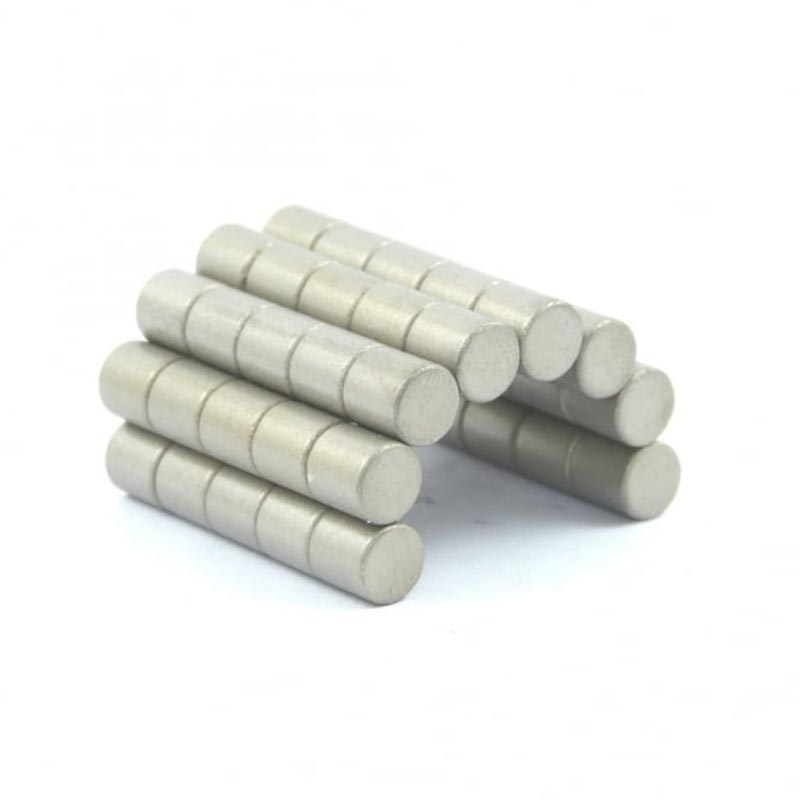
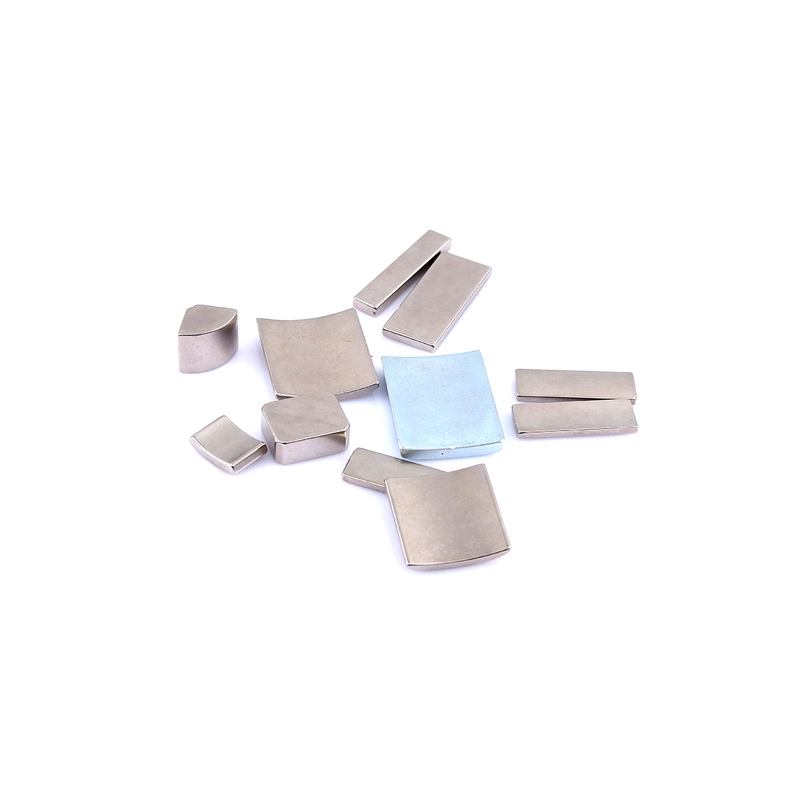
Samarium Cobalt
We specialize in manufacturing high-performance samarium cobalt (SmCo) magnets engineered to deliver superior magnetic stability, corrosion resistance, and thermal resilience in extreme environments. Our SmCo magnets excel in applications where temperature fluctuations, corrosive conditions, or high precision are critical. With advanced material formulations and rigorous quality control, we provide customized solutions for aerospace, medical technology, energy systems, and industrial automation.
Read MoreSend Inquiry
As a reliable Ring SmCo manufacturer and supplier in China, we have custom options and volume discount pricing. Please just send us a quotation!