
How Are Large Industrial Block Magnets Changing Industrial Systems?
As industrial equipment becomes more powerful, compact, and automated, magnetic components are playing an increasingly important role in modern engineering. Large Industrial Block Magnets are particularly valuable in applications that require strong magnetic holding force, structural stability, and dependable performance under demanding working conditions. Their block-shaped geometry also provides engineers with greater flexibility when designing magnetic assemblies for machinery, handling systems, separation equipment, and other industrial applications.
The development of magnetic technology is closely connected with the evolution of industrial manufacturing. Equipment designers are seeking materials that can deliver consistent magnetic performance while fitting into increasingly specialized mechanical structures. This trend has encouraged manufacturers to improve material selection, machining accuracy, surface treatment, and customized production capabilities.
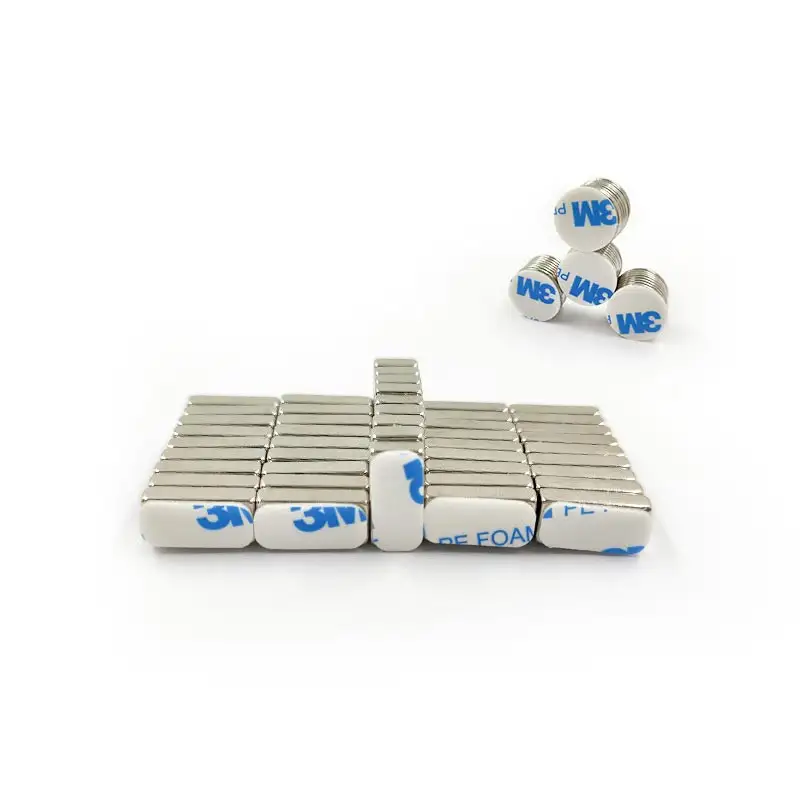
Why Block-Shaped Magnetic Components Matter in Industry
Magnet geometry has a direct influence on how magnetic force is distributed within an assembly. A block configuration can provide a broad working surface and can be integrated into mechanical structures where a cylindrical or ring-shaped magnet may not be suitable. This makes block magnets practical for applications requiring directional attraction, positioning, holding, or magnetic coupling.
In industrial environments, the magnet itself is rarely used as an isolated component. It is normally integrated into a larger system that may include steel housings, mounting structures, sensors, mechanical actuators, conveyors, or automated equipment. For this reason, dimensional accuracy and consistency are just as important as magnetic strength.
Design Characteristics That Support Industrial Integration
- Flat surfaces can simplify mechanical mounting and positioning.
- Rectangular geometries can fit efficiently into compact equipment structures.
- Different length, width, and thickness combinations support customized assemblies.
- Magnetic orientation can be selected according to the requirements of the application.
- Surface treatments can improve resistance to environmental exposure.
Proper magnet selection therefore requires consideration of the complete operating environment rather than magnetic strength alone. Engineers need to evaluate available installation space, working temperature, mechanical loads, exposure to moisture or chemicals, and the required magnetic field characteristics before determining an appropriate solution.
Industrial Applications Are Becoming More Diverse
The use of permanent magnets has expanded well beyond traditional magnetic holding applications. Modern factories increasingly rely on magnetic components in automation systems, material handling equipment, motors, sensors, fixtures, and separation technologies. This wider application range is creating new technical requirements for manufacturers.
| Application Area | Typical Function | Key Requirement |
|---|---|---|
| Material Handling | Holding, lifting, positioning, and conveying | Stable magnetic force |
| Industrial Automation | Actuation, sensing, and component positioning | Dimensional consistency |
| Magnetic Separation | Removing ferrous particles from material streams | Reliable magnetic field |
| Motor Systems | Magnetic interaction within electromechanical assemblies | Temperature stability |
| Manufacturing Fixtures | Workpiece holding and positioning | Mechanical integration |
Material Handling and Positioning
Material handling is one of the areas where strong permanent magnets can provide practical advantages. Magnetic fixtures and handling systems can secure ferromagnetic components without relying entirely on mechanical clamps. This can simplify certain production processes and support faster positioning during repetitive operations.
In automated production lines, magnetic components may also work together with pneumatic, electrical, or robotic systems. Consistent magnetic behavior helps maintain predictable operation, especially when components need to be repeatedly picked, positioned, transferred, or released.
Magnetic Separation and Industrial Processing
Magnetic separation systems depend on controlled magnetic fields to attract and remove ferrous materials from bulk products or industrial process streams. Block-shaped permanent magnets can be incorporated into magnetic assemblies where space, field distribution, and mounting configuration need to be carefully controlled.
The effectiveness of a separation system depends on more than the nominal strength of an individual magnet. Magnet arrangement, air gap, material characteristics, flow conditions, and equipment configuration all influence the final performance. This makes engineering design an important part of magnetic system development.
What Determines Magnetic Performance in Real Applications?
Magnetic performance is influenced by the composition and grade of the material, magnetization direction, geometry, surface condition, operating temperature, and surrounding magnetic circuit. A magnet that performs well in one application may not provide the same results in another system if the installation conditions are significantly different.
For industrial applications, manufacturers therefore need to consider the relationship between magnetic properties and actual operating conditions. This approach helps prevent situations where a component appears suitable based only on its nominal magnetic strength but fails to meet the requirements of the complete assembly.
Material Selection and Operating Conditions
Permanent magnets can be manufactured from different material families, including neodymium-iron-boron, ferrite, samarium cobalt, and alnico. Each material has its own combination of magnetic characteristics, temperature behavior, corrosion resistance, mechanical properties, and cost considerations.
Ferrite materials are commonly considered where corrosion resistance, cost efficiency, and stable general-purpose performance are important. Rare earth materials can provide significantly higher magnetic energy density and may be preferred where equipment designers need stronger magnetic performance within a limited space.
Samarium cobalt is particularly relevant to applications where elevated operating temperatures and strong resistance to demagnetization are important. Alnico materials offer distinctive temperature characteristics and can be useful in specialized industrial and sensing applications.
The appropriate material should therefore be selected according to the complete application rather than based on strength alone. Professional magnetic manufacturers can help engineers compare material options according to environmental and mechanical requirements.
Manufacturing Precision Is Becoming More Important
As industrial equipment becomes more sophisticated, magnetic component manufacturing is moving toward tighter process control. Dimensional variation, magnetization consistency, surface quality, and material uniformity can all influence the performance of the final magnetic assembly.
For block-shaped products, dimensional accuracy is particularly relevant because flat surfaces and defined edges are often used directly in mechanical installation. A small dimensional deviation may affect the air gap, alignment, contact area, or position of the magnetic component within the system.
From Raw Material to Finished Component
A reliable manufacturing process begins with appropriate raw material preparation. Material composition needs to be controlled to achieve the required magnetic characteristics and physical properties. Subsequent forming, sintering, grinding, machining, magnetization, coating, and inspection processes must also be managed carefully.
- Raw material quality affects the consistency of magnetic properties.
- Forming and sintering influence the internal structure of the material.
- Precision machining determines the final dimensional characteristics.
- Magnetization establishes the required magnetic orientation.
- Surface treatment helps protect the component in demanding environments.
- Final inspection verifies conformity with technical requirements.
This process-oriented approach is especially important for customized industrial components. When magnets are designed to fit directly into a mechanical assembly, manufacturing consistency becomes an essential part of system reliability.
Customization Supports More Specialized Equipment
Industrial equipment rarely follows a completely standardized design. Different machines may have unique installation spaces, magnetic circuits, mounting methods, and performance requirements. As a result, customized magnetic components are becoming increasingly common in engineering projects.
Customization can involve more than simply changing the external dimensions. Manufacturers may also adjust magnetization direction, material grade, surface treatment, tolerances, and packaging according to the intended application.
Engineering Considerations for Customized Components
- Available installation space and mechanical mounting method.
- Required magnetic orientation and working direction.
- Expected operating temperature and environmental exposure.
- Required resistance to demagnetization.
- Interaction between the magnet and surrounding ferromagnetic materials.
- Required dimensional tolerances for assembly.
Close communication between the engineering team and magnet manufacturer can significantly improve the development process. Providing drawings, operating conditions, installation information, and performance requirements allows the manufacturer to recommend a more appropriate magnetic configuration.
Quality Control Extends Beyond Magnetic Strength
Magnetic strength is an important performance indicator, but industrial quality control needs to consider a wider range of characteristics. A component can have strong magnetic properties and still be unsuitable if its dimensions, coating, magnetization direction, or mechanical integration do not meet the requirements of the application.
Professional manufacturers therefore use multiple inspection procedures to evaluate finished products. Depending on the application, inspection may cover dimensions, appearance, magnetic characteristics, surface treatment, material consistency, and other technical parameters.
Consistency Across Production Batches
Consistency is particularly important for industrial customers developing equipment for repeated production. When magnetic components are used in large assemblies, variations between individual pieces can influence system behavior and manufacturing efficiency.
Stable production processes help reduce such variations and make it easier for engineering teams to maintain consistent equipment performance. This is one reason why manufacturing experience and process management are increasingly important when selecting a long-term magnetic component supplier.
Where Is Magnetic Technology Heading Next?
The future of magnetic components will be closely associated with electrification, automation, robotics, energy-efficient machinery, and intelligent manufacturing. As equipment designers continue to reduce system size while increasing functional performance, magnetic materials will remain an important part of many electromechanical technologies.
Another important direction is the development of higher-performance materials. Research into magnetic energy density, temperature resistance, coercivity, material uniformity, and weight reduction is helping manufacturers respond to increasingly demanding applications.
Efficiency and Lightweight Engineering
Industrial equipment manufacturers are increasingly focused on reducing unnecessary material and energy consumption. Strong magnetic materials can contribute to lightweight component designs by delivering the required magnetic performance within a smaller physical volume.
This is particularly relevant to electric motors and automated equipment, where component weight and available installation space can influence overall system efficiency. Improved magnetic materials and optimized magnetic circuits can help engineers develop more compact equipment without sacrificing required performance.
Integration With Intelligent Manufacturing
Automation is also changing the role of magnetic components. Modern equipment combines sensors, controllers, motors, robotic mechanisms, and data systems into integrated production platforms. Magnetic components can support these technologies through positioning, actuation, sensing, and motor applications.
As intelligent manufacturing continues to evolve, magnetic component manufacturers will need to provide products with greater consistency and more precise engineering support. The ability to move from standard products to application-specific solutions will become increasingly valuable.
A Reliable Manufacturing Partner for Industrial Magnetic Solutions
For industrial applications, selecting a magnetic manufacturer requires consideration of technical experience, production capability, research strength, quality management, and customization support. A manufacturer with experience across multiple magnetic material families can provide broader options when different applications require different performance characteristics.
Zhaobao Magnet Group has been engaged in permanent magnet manufacturing since the early development of China's rare earth magnet industry. The company integrates research and development, manufacturing, and sales, with product capabilities covering neodymium, ferrite, samarium cobalt, alnico, and other magnetic materials.
Its product portfolio extends beyond standard magnets to include magnetic components, magnetic tools, magnetic household products, magnetic toys, and magnetic mechanical equipment. The company also supports customized design and production for applications with specific dimensional, performance, or structural requirements.
With continuous investment in magnetic material research and manufacturing technology, Zhaobao Magnet Group has developed expertise in areas such as high operating temperature performance, high coercivity, magnetic consistency, and reduced weight loss. Its research activities also address technical challenges associated with permanent magnet motors and large-format magnetic products.
For industrial equipment manufacturers seeking dependable magnetic components, engineering support and manufacturing consistency are essential considerations. Zhaobao Magnet Group combines long-term industry experience with research-driven manufacturing capabilities to provide customized magnetic solutions for automotive, electronics, communications, medical, aerospace, automation, and other industrial applications.
As industrial systems continue to evolve toward higher efficiency, greater automation, and more compact designs, Zhaobao Magnet Group is positioned to support these developments with professionally manufactured magnetic products and application-oriented engineering solutions.