
Why Is NdFeB Magnet Technology the Key to Smaller, Stronger, and More Efficient Devices
Abstract: An NdFeB Magnet combines neodymium, iron, and boron to deliver exceptionally high magnetic energy in a compact form. For engineers and industrial buyers seeking strong magnetic performance without excessive size or weight, NdFeB magnets have become an important permanent-magnet solution. This guide explains their composition, performance characteristics, grades, applications, protection methods, and purchasing considerations, while highlighting the manufacturing capabilities of Zhao BAO.
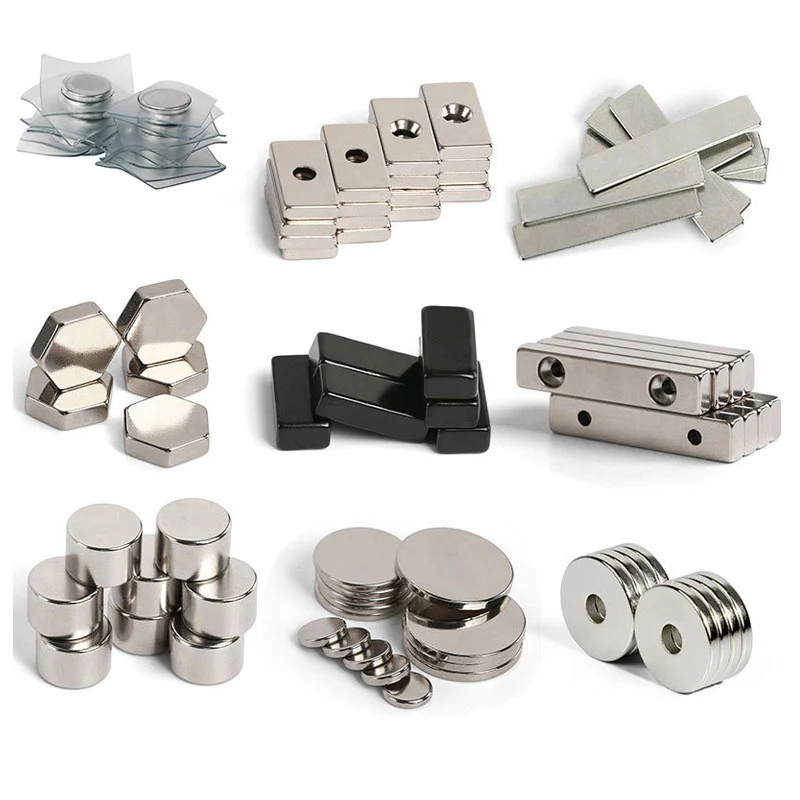
Table of Contents
- What Is an NdFeB Magnet?
- Why Choose NdFeB Magnets for Industrial Applications?
- What Determines NdFeB Magnet Performance?
- How Do NdFeB Grades and Temperature Ratings Differ?
- Where Are NdFeB Magnets Commonly Used?
- How Should NdFeB Magnets Be Protected and Maintained?
- What Should Buyers Consider Before Purchasing NdFeB Magnets?
- Frequently Asked Questions About NdFeB Magnets
- Conclusion
What Is an NdFeB Magnet?
An NdFeB Magnet, also known as a neodymium-iron-boron magnet, is a rare-earth permanent magnet primarily composed of neodymium, iron, and boron. According to the product information provided by Zhao BAO, its major advantage is its high magnetic energy product and strong magnetic force relative to its physical size. This makes NdFeB particularly suitable for equipment where compact dimensions, lightweight construction, and strong magnetic performance are important requirements.
Unlike conventional magnetic materials that may require a larger volume to achieve comparable magnetic force, NdFeB technology allows designers to achieve high magnetic performance within smaller components. This characteristic has helped NdFeB magnets become widely adopted in motors, automation equipment, sensors, electronics, automotive systems, and other high-performance applications.
For industrial procurement teams, selecting the correct NdFeB Magnet is not simply a matter of choosing the strongest available grade. The magnet must also match the operating temperature, corrosion conditions, dimensions, magnetization direction, mechanical requirements, and intended magnetic circuit.
Why Choose NdFeB Magnets for Industrial Applications?
The primary reason engineers choose NdFeB is the combination of magnetic strength and compact size. Its high magnetic energy product allows a magnet to provide substantial magnetic output without occupying unnecessary space.
Key advantages include:
- High magnetic energy density: Strong magnetic performance can be achieved from relatively small components.
- High coercivity: Properly selected grades can resist demagnetization caused by external magnetic fields.
- Compact design: Smaller magnets can help reduce the size and weight of assemblies.
- Design flexibility: NdFeB magnets can be manufactured in disc, block, arc, ring, countersunk, and special shapes.
- Wide application range: They support applications from consumer electronics to industrial motors and automation systems.
- Custom engineering: Material grade, geometry, coating, magnetization, and dimensional requirements can be adapted to different projects.
These advantages are particularly valuable in modern equipment where manufacturers are continuously trying to increase power density while reducing overall product size.
What Determines NdFeB Magnet Performance?
Magnet performance depends on more than the visible size of the component. Engineers typically consider several magnetic and physical parameters when selecting an NdFeB material.
| Parameter | What It Indicates | Why It Matters |
|---|---|---|
| Remanence (Br) | Residual magnetic flux density | Helps determine the magnetic output after magnetization |
| Coercivity | Resistance to demagnetization | Important for stable operation under demanding magnetic conditions |
| Maximum Energy Product (BH)max | Magnetic energy density | Useful for evaluating magnetic strength within a limited volume |
| Operating Temperature | Recommended thermal environment | Helps prevent irreversible loss of magnetic performance |
| Dimensions and Tolerance | Physical accuracy of the magnet | Critical for precise mechanical and magnetic assembly |
| Coating | Surface protection | Improves resistance to oxidation and environmental exposure |
For example, a magnet designed for a standard indoor application may have very different requirements from one installed inside a high-temperature motor. Therefore, performance specifications should always be evaluated as a complete package rather than focusing only on the nominal grade.
How Do NdFeB Grades and Temperature Ratings Differ?
NdFeB magnets are available in different grades to meet different magnetic and environmental requirements. Standard grades can provide strong magnetic performance for general applications, while specialized temperature classifications are designed for environments where thermal stability is more demanding.
Common temperature classifications include:
- H: Higher-temperature performance than standard grades.
- SH: Suitable for applications requiring enhanced thermal stability.
- UH: Designed for more demanding high-temperature environments.
- EH: Used where particularly high temperature resistance is required.
- AH: Intended for applications requiring very high coercivity and thermal stability.
The source product information indicates that different formulations and manufacturing processes can provide heat-resistant grades suitable for environments extending above 200°C. However, the appropriate grade should always be selected according to the actual operating temperature, magnetic circuit, duty cycle, and safety margin of the application.
It is also important to distinguish between maximum temperature capability and recommended continuous operating temperature. A magnet exposed repeatedly to temperatures near its upper limit may experience performance degradation, so professional material selection should account for the complete thermal environment.
Where Are NdFeB Magnets Commonly Used?
The combination of high magnetic strength, compact dimensions, and customizable geometry makes NdFeB suitable for a broad range of modern technologies.
Electric Motors and Generators
NdFeB magnets are widely used in permanent-magnet motors, servo motors, high-speed motors, compressors, and other systems where high power density is required. Strong magnets can contribute to compact motor architectures and efficient magnetic circuits.
Automotive Systems
Modern vehicles use permanent magnets in various motors, actuators, sensors, and other electromagnetic components. Electric and new-energy vehicle systems can particularly benefit from high-performance rare-earth magnets.
Industrial Automation
Robotic equipment, motion-control systems, magnetic couplings, sensors, and automated machinery can use NdFeB magnets for positioning, actuation, detection, and power transmission.
Consumer Electronics
The compact form factor of NdFeB supports applications where internal space is limited. Small magnets can be integrated into speakers, microphones, motors, sensors, and compact mechanical assemblies.
Clean Energy Equipment
Permanent-magnet generators and energy-efficient motor systems can use high-performance NdFeB materials to achieve strong magnetic fields within compact structures.
Zhaobao's product portfolio covers multiple magnet geometries, including disc magnets, block magnets, arc magnets, ring magnets, countersink magnets, and special-shaped magnets, allowing manufacturers to select a form that matches their mechanical and magnetic design requirements.
How Should NdFeB Magnets Be Protected and Maintained?
Although NdFeB provides excellent magnetic performance, the material is relatively sensitive to oxidation and is mechanically hard and brittle. Appropriate surface protection and handling are therefore essential.
Common protection considerations include:
- Use suitable coatings: Surface coatings help protect the rare-earth alloy against oxidation and corrosion.
- Control humidity: Avoid prolonged exposure to damp environments unless the magnet has been specifically engineered for such conditions.
- Manage temperature: Do not exceed the magnet's specified operating temperature.
- Prevent impact: NdFeB magnets can chip or fracture if they collide forcefully with hard surfaces.
- Store carefully: Keep strong magnets separated from magnetic-sensitive equipment and components.
Proper packaging is equally important during transportation. Zhao BAO's product information describes individual protective wrapping, alternating magnetic-pole arrangements, magnetic shielding using iron or steel plates, and sturdy outer packaging to reduce transportation risks.
What Should Buyers Consider Before Purchasing NdFeB Magnets?
When purchasing from a China NdFeB Magnet supplier or manufacturer, buyers should provide sufficient technical information rather than simply requesting a specific magnet grade.
A practical purchasing checklist includes:
- Required magnet shape and dimensions
- Magnetic grade or required magnetic performance
- Operating and peak temperature
- Magnetization direction and pole configuration
- Surface coating requirements
- Dimensional tolerances
- Expected production volume
- Application environment and corrosion exposure
- Packaging and international shipping requirements
- Quality inspection and certification requirements
A reliable manufacturer should also be able to discuss whether the requested grade is actually appropriate for the application. According to its corporate information, Zhaobao has more than 30 years of experience in rare-earth permanent magnets, an annual production capacity of 8,000 tons, and quality systems including IATF 16949, ISO 9001, ISO 14001, ISO 45001, and SA8000 certifications.
For demanding OEM projects, technical communication before production can significantly reduce the risk of selecting a magnet that is unnecessarily expensive, insufficiently heat resistant, or poorly matched to the magnetic circuit.
Frequently Asked Questions About NdFeB Magnets
What does NdFeB stand for?
NdFeB stands for neodymium-iron-boron. It is a rare-earth permanent magnet material known for its high magnetic energy density and strong magnetic performance.
Are NdFeB magnets stronger than ferrite magnets?
In general, NdFeB magnets provide substantially higher magnetic performance in a smaller volume than conventional ferrite magnets. The best choice, however, depends on cost, temperature, corrosion resistance, size, and application requirements.
Can NdFeB magnets be customized?
Yes. Depending on the manufacturer's capabilities, buyers can request customized shapes, dimensions, grades, magnetization directions, coatings, and other specifications. Customization is particularly useful for motors, sensors, automation equipment, and OEM assemblies.
Are NdFeB magnets resistant to high temperatures?
Some NdFeB grades are specifically formulated for higher-temperature applications. H, SH, UH, EH, and AH classifications can provide different levels of thermal stability. The correct selection should be based on the actual operating temperature and application conditions.
How should strong NdFeB magnets be shipped?
Because strong magnets can attract ferromagnetic materials and may be brittle, specialized packaging and magnetic shielding may be required. Individual protection, appropriate pole arrangement, steel shielding, and robust outer packaging can help reduce transportation risks.
Conclusion
NdFeB Magnet technology offers an effective combination of high magnetic strength, compact size, design flexibility, and broad industrial applicability. From motors and automotive systems to sensors, automation equipment, electronics, and clean-energy technologies, the right NdFeB material can help engineers achieve higher magnetic performance while supporting smaller and more efficient product designs. For manufacturers and procurement teams, the key is to evaluate grade, temperature, dimensions, coating, magnetization, and application conditions together rather than selecting a magnet based on strength alone. If you are looking for a reliable NdFeB Magnet supplier with professional manufacturing experience and customized solutions, contact us today to discuss your technical requirements, request a suitable solution, and obtain a competitive quotation from Zhao BAO.