
Abstract: Samarium Cobalt is a high-performance rare-earth permanent magnet material designed for applications where thermal stability, corrosion resistance, magnetic reliability, and long service life are essential. As a professional magnet manufacturer, Zhaobao develops Samarium Cobalt solutions for demanding industries including aerospace, medical technology, energy systems, industrial automation, and high-temperature motors. This guide explains its composition, key properties, material grades, applications, customization options, and selection considerations.
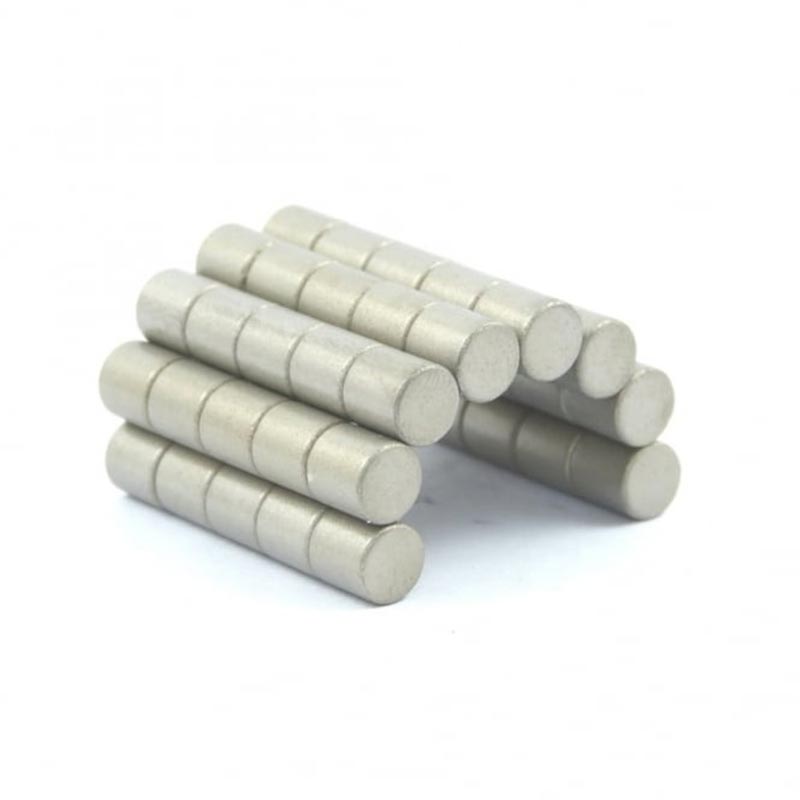
Table of Contents
- What Is Samarium Cobalt?
- What Are the Key Properties of Samarium Cobalt?
- What Is the Difference Between SmCo5 and Sm2Co17?
- Where Is Samarium Cobalt Used?
- Why Choose Samarium Cobalt Over Other Permanent Magnets?
- How Should You Select the Right Samarium Cobalt Magnet?
- How Can Samarium Cobalt Magnets Be Customized?
- What Should Buyers Consider When Sourcing Samarium Cobalt?
- Frequently Asked Questions About Samarium Cobalt
What Is Samarium Cobalt?
Samarium Cobalt, commonly abbreviated as SmCo, is a rare-earth permanent magnet material made primarily from samarium and cobalt. It is recognized for combining strong magnetic performance with excellent thermal stability and corrosion resistance. These characteristics make it particularly valuable in environments where conventional permanent magnets may experience excessive temperature-related performance loss or environmental degradation.
Unlike magnets selected primarily for maximum magnetic strength, SmCo is often chosen because it can maintain dependable magnetic output under demanding operating conditions. According to the technical information provided by Zhaobao, SmCo products can achieve energy products from approximately 16 MGOe to 32 MGOe, while certain Sm2Co17 grades are designed for operating temperatures up to 350°C.
For engineers and industrial buyers, this makes Samarium Cobalt especially attractive when the design priorities include temperature resistance, resistance to demagnetization, dimensional precision, and long-term reliability.
What Are the Key Properties of Samarium Cobalt?
The performance of an SmCo magnet is determined by its material formulation, manufacturing process, geometry, magnetization direction, and operating environment. Several properties distinguish it from many other permanent magnet materials.
- High thermal stability: SmCo can maintain reliable magnetic performance across demanding temperature ranges.
- Low temperature coefficient: Magnetic output remains comparatively stable when ambient or operating temperatures fluctuate.
- Strong coercivity: High coercive force helps the magnet resist demagnetization caused by external magnetic fields or operating conditions.
- Corrosion resistance: SmCo naturally provides strong resistance to oxidation and corrosion, making it suitable for humid or chemically challenging environments.
- Long-term reliability: Its combination of thermal and magnetic stability supports applications requiring consistent performance over extended operating cycles.
- Precision customization: SmCo can be manufactured in forms such as discs, rings, blocks, and arcs, with customized dimensions and magnetization patterns.
These characteristics explain why SmCo is frequently considered for aerospace sensors, precision actuators, high-temperature motors, energy systems, and other applications where failure or magnetic instability can have significant consequences.
What Is the Difference Between SmCo5 and Sm2Co17?
Two major SmCo material families are commonly used in industrial magnetic applications: SmCo5 and Sm2Co17. Although both provide excellent thermal and magnetic stability, their performance characteristics differ.
| Property | SmCo5 | Sm2Co17 |
|---|---|---|
| Maximum Energy Product | 15–24 MGOe | 22–32 MGOe |
| Typical Maximum Operating Temperature | Up to 250°C | Up to 350°C |
| Coercivity (Hcj) | 15–25 kOe | 18–25 kOe |
| Remanence (Br) | 0.8–1.2 T | 0.9–1.15 T |
| Curie Temperature | 700–750°C | 800–850°C |
| Typical Selection Focus | Moderate temperature and easier magnetization | Higher energy product and extreme-temperature applications |
SmCo5 can be appropriate when moderate thermal requirements and magnetization characteristics are priorities. Sm2Co17 is generally more suitable for applications demanding higher energy density and greater thermal capability. The appropriate grade should ultimately be determined according to the actual magnetic circuit, working temperature, mechanical design, and demagnetization conditions.
Where Is Samarium Cobalt Used?
The combination of thermal resilience, corrosion resistance, and magnetic stability gives Samarium Cobalt a broad range of industrial applications.
Aerospace and Defense
SmCo can be used in navigation systems, sensors, communication equipment, radar systems, and other aerospace components. Its ability to maintain magnetic performance under temperature fluctuations makes it valuable for demanding environments.
Medical Technology
Precision magnetic components can be incorporated into MRI-related equipment, surgical robotics, diagnostic systems, and other medical technologies that require stable magnetic fields and accurate positioning.
Energy and Industrial Equipment
High-temperature motors, wind turbine generators, magnetic couplings, and precision actuators can benefit from SmCo's thermal stability and resistance to demagnetization. This is particularly important when magnetic components operate close to heat-generating mechanical or electrical systems.
Consumer Electronics and Sensors
SmCo can also support miniature sensors, audio components, wearable devices, and other compact systems where stable magnetic performance is more important than simply achieving the lowest material cost.
Why Choose Samarium Cobalt Over Other Permanent Magnets?
Choosing a permanent magnet should never depend solely on maximum magnetic strength. Engineers should evaluate the complete operating environment and the consequences of performance degradation.
Samarium Cobalt can be advantageous when a project requires:
- High-temperature operation: SmCo is particularly suitable for applications exposed to elevated temperatures.
- Stable magnetic output: Its low reversible temperature coefficient supports consistent magnetic behavior.
- Corrosion resistance: SmCo is naturally resistant to oxidation and corrosion and may not require a protective coating in many environments.
- High resistance to demagnetization: High coercivity supports stable performance in challenging magnetic circuits.
- Long service life: Thermal and environmental stability can help reduce performance deterioration over time.
However, SmCo is not automatically the best choice for every application. It is a relatively brittle material and can be more expensive than some alternative magnet materials. Therefore, engineers should balance magnetic requirements, temperature, mechanical loading, environmental exposure, production volume, and total system cost.
How Should You Select the Right Samarium Cobalt Magnet?
For procurement teams and engineers, selecting an SmCo magnet should begin with application requirements rather than a generic grade number. A practical evaluation should include the following factors:
- Operating temperature: Determine normal, peak, and transient temperatures.
- Required magnetic performance: Establish target remanence, coercivity, and energy product.
- Magnet geometry: Identify whether the application requires a disc, ring, block, arc, or special shape.
- Magnetization: Specify axial, radial, multi-pole, or another required magnetization pattern.
- Dimensional tolerances: Precision assemblies may require tighter tolerances and additional inspection.
- Environmental exposure: Consider humidity, chemicals, saltwater, vibration, and mechanical stress.
- Annual demand: Production volume affects manufacturing planning, sampling, testing, and delivery arrangements.
Providing these details to a professional Samarium Cobalt manufacturer allows the supplier's technical team to recommend a suitable material and configuration instead of relying on an unsuitable standard specification.
How Can Samarium Cobalt Magnets Be Customized?
Industrial magnetic systems frequently require more than an off-the-shelf magnet. Custom SmCo solutions can be developed around the physical and magnetic requirements of the final assembly.
Common customization options include:
- Disc, block, ring, arc, and special geometries
- Customized length, width, diameter, and thickness
- Specific dimensional tolerances
- Axial, radial, and multi-pole magnetization
- Material grade selection between SmCo5 and Sm2Co17
- Optional epoxy, nickel, or zinc coatings for additional mechanical protection
- Prototype production for design verification
For complex magnetic assemblies, early technical communication can help prevent problems related to magnetic orientation, clearance, temperature exposure, and installation. A supplier with integrated manufacturing and testing capabilities can also simplify quality control throughout the project.
What Should Buyers Consider When Sourcing Samarium Cobalt?
For industrial procurement, product quality is only one part of supplier evaluation. Buyers should also examine manufacturing capability, quality management, technical support, customization capacity, and delivery reliability.
Zhaobao reports more than 30 years of experience in rare-earth permanent magnet development and production, with more than 80 technical R&D professionals and an annual rare-earth permanent magnet production capacity of approximately 8,000 tons. Its stated certifications include IATF 16949, ISO 9001, ISO 14001, ISO 45001, and SA8000. The company also reports 43 invention patents and cooperation with the Chinese Academy of Sciences on permanent magnet motor technology.
For SmCo procurement, buyers should ideally request:
- Material grade and magnetic performance data
- Dimensional inspection requirements
- Magnetization specifications
- Operating-temperature requirements
- Batch testing and quality documentation
- Applicable compliance documentation
- Prototype or sample validation before mass production
The manufacturer also describes a process covering consultation, prototyping, production, batch testing, certification, and global delivery. This structured workflow can be valuable for projects where magnetic components are integrated into high-value equipment.
Frequently Asked Questions About Samarium Cobalt
Is Samarium Cobalt suitable for high-temperature applications?
Yes. High-temperature stability is one of the major reasons engineers select SmCo. Depending on the grade, SmCo products can be designed for demanding thermal environments, with Sm2Co17 offering particularly strong high-temperature capability.
Is Samarium Cobalt resistant to corrosion?
Yes. SmCo has strong inherent resistance to oxidation and corrosion compared with many other permanent magnet materials. Nevertheless, the final design should consider the exact chemical and environmental conditions.
What is the difference between SmCo5 and Sm2Co17?
SmCo5 generally provides a combination of moderate temperature capability and favorable magnetization characteristics, while Sm2Co17 offers higher energy product and greater high-temperature capability. The appropriate grade depends on the application's magnetic and thermal requirements.
Can Samarium Cobalt magnets be customized?
Yes. SmCo magnets can be customized in geometry, dimensions, tolerances, magnetization direction, pole configuration, material grade, and selected protective coatings. Custom prototypes can also be used to validate a design before mass production.
Is Samarium Cobalt stronger than neodymium magnets?
Not necessarily. Neodymium magnets generally offer higher maximum magnetic energy density, while SmCo's key advantages are thermal stability, corrosion resistance, and resistance to demagnetization. The better material depends on the operating environment and system requirements.
Conclusion
Samarium Cobalt remains an important high-performance permanent magnet material for applications where temperature stability, corrosion resistance, magnetic reliability, and long-term performance matter. From aerospace sensors and medical equipment to high-temperature motors, generators, actuators, and industrial automation, SmCo can provide dependable magnetic performance in environments that place demanding requirements on permanent magnets. If you are evaluating SmCo5 or Sm2Co17 for a new project, need customized dimensions or magnetization, or are looking for a reliable China Samarium Cobalt manufacturer for production, contact us with your application details, operating temperature, required dimensions, magnetic specifications, and quantity to receive a customized technical proposal and sourcing support.