
Why Are Large Rare Earth Magnets Essential for Modern Industrial Applications?
Large rare earth magnets have become indispensable in industries ranging from renewable energy and automotive engineering to robotics and heavy manufacturing. Their unmatched magnetic strength, durability, and efficiency make them the preferred solution for demanding applications. This comprehensive guide explores how these magnets work, where they are used, how to choose the right type, and what buyers should consider before purchasing large-scale magnetic components.
Contents
- What Are Large Rare Earth Magnets?
- Main Types of Rare Earth Magnets
- Why Are They So Powerful?
- Industries That Depend on Large Magnets
- Key Benefits for Industrial Users
- How to Choose the Right Magnet
- Common Sizes and Shapes
- Temperature Resistance Considerations
- Protective Coatings and Durability
- Handling and Safety Tips
- Large Rare Earth Magnets vs Ferrite Magnets
- How Industrial Magnets Are Manufactured
- Future Trends in Magnetic Technology
- Frequently Asked Questions
- Final Thoughts
What Are Large Rare Earth Magnets?
Large rare earth magnets are high-performance permanent magnets manufactured using rare earth elements such as neodymium, samarium, dysprosium, and praseodymium. These materials produce extremely strong magnetic fields compared to conventional ceramic or ferrite magnets.
The term “large” generally refers to magnets designed for industrial-scale applications, including wind turbines, MRI systems, electric vehicle motors, magnetic separators, automation equipment, and heavy-duty lifting systems.
Unlike traditional magnets, rare earth magnets deliver exceptional magnetic force while maintaining relatively compact dimensions. This enables manufacturers to reduce equipment size while increasing performance efficiency.
Important Insight: Large rare earth magnets can generate magnetic energy several times stronger than ferrite magnets of the same size, making them ideal for applications requiring compact yet powerful magnetic systems.
What Are the Main Types of Rare Earth Magnets?
There are two primary categories of rare earth magnets widely used in industrial applications:
| Type | Key Features | Common Applications |
|---|---|---|
| Neodymium Magnets (NdFeB) | Highest magnetic strength, compact size, cost-effective | EV motors, wind turbines, robotics, speakers |
| Samarium Cobalt Magnets (SmCo) | Excellent high-temperature resistance and corrosion resistance | Aerospace, defense systems, medical devices |
Among these options, neodymium magnets are the most commonly used because they provide the best balance of magnetic strength and manufacturing cost.
Why Are Large Rare Earth Magnets So Powerful?
The extraordinary strength of rare earth magnets comes from their atomic structure. Rare earth elements possess unpaired electrons that create intense magnetic moments. During manufacturing, these magnetic domains are aligned in the same direction, producing an exceptionally strong magnetic field.
Several factors contribute to their performance:
- High magnetic energy density
- Superior coercivity
- Excellent resistance to demagnetization
- Efficient energy conversion
- Compact dimensional efficiency
Because of these advantages, engineers can design smaller motors and lighter equipment without sacrificing power output.
Which Industries Depend on Large Rare Earth Magnets?
Large rare earth magnets support numerous modern industries. Their versatility and efficiency have transformed manufacturing, transportation, healthcare, and renewable energy systems.
Renewable Energy
Wind turbine generators rely on powerful neodymium magnets to improve electricity generation efficiency while reducing mechanical complexity.
Electric Vehicles
EV motors use large rare earth magnets to deliver high torque, fast acceleration, and compact motor designs.
Medical Equipment
MRI scanners and advanced imaging systems require stable magnetic fields generated by high-performance magnets.
Industrial Automation
Robotic arms, conveyor systems, and magnetic separators depend on industrial magnets for precision and reliability.
What Benefits Do Large Rare Earth Magnets Offer?
Businesses choose large rare earth magnets because they improve operational efficiency while reducing equipment size and energy consumption.
| Benefit | Industrial Impact |
|---|---|
| High Magnetic Strength | Supports compact and efficient designs |
| Energy Efficiency | Reduces operational power consumption |
| Long Service Life | Minimizes maintenance and replacement costs |
| Strong Stability | Maintains consistent performance over time |
| Customization Options | Fits unique industrial requirements |
How Can Buyers Choose the Right Large Rare Earth Magnets?
Selecting the correct industrial magnet requires evaluating several important factors. Many buyers focus only on magnetic strength, but environmental conditions and dimensional tolerances are equally important.
Consider the following before purchasing:
- Required magnetic force
- Operating temperature range
- Corrosion exposure
- Shape and dimensional specifications
- Surface coating requirements
- Mechanical stress levels
- Budget and production scale
Working with experienced manufacturers helps ensure that the magnet specifications match the intended application precisely.
Buyer Tip: Always request magnetic performance data, coating specifications, and temperature resistance information before placing bulk industrial orders.
What Sizes and Shapes Are Commonly Available?
Large rare earth magnets can be customized into numerous geometries depending on industrial requirements.
| Shape | Typical Use |
|---|---|
| Block Magnets | Industrial motors and magnetic assemblies |
| Ring Magnets | Electric motors and generators |
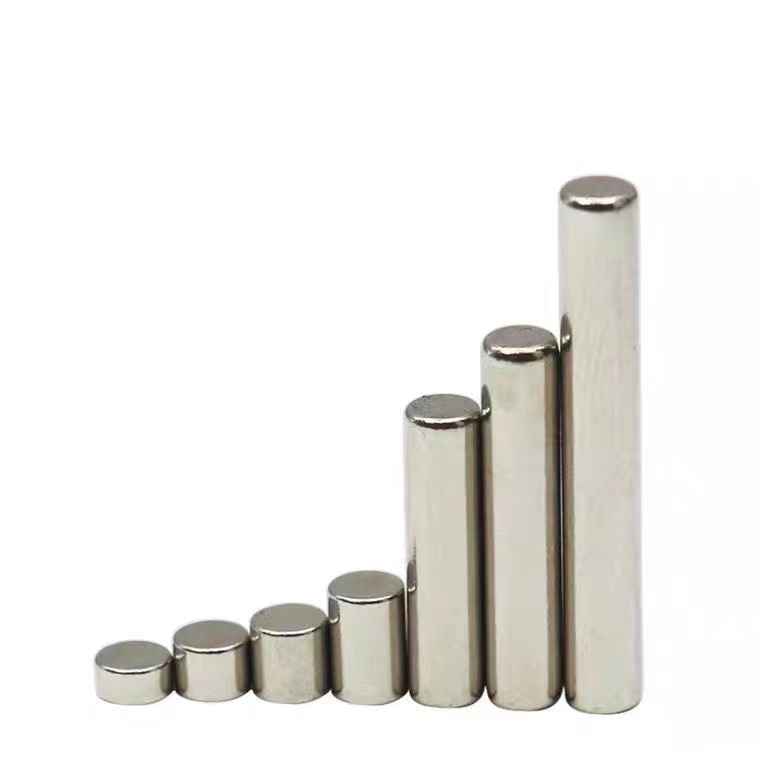
| Disc Magnets | Sensors and magnetic couplings |
| Arc Magnets | Rotor assemblies and turbines |
| Custom Shapes | Specialized engineering projects |
Custom-engineered magnets often provide superior performance because they are designed specifically for unique operating conditions.
Why Is Temperature Resistance Important?
Temperature significantly affects magnetic performance. Standard neodymium magnets may lose magnetic strength when exposed to excessive heat.
Industrial environments such as automotive engines, turbines, and aerospace systems often require magnets capable of operating under elevated temperatures.
High-temperature grades are specially engineered to maintain magnetic stability under demanding conditions.
| Magnet Type | Maximum Operating Temperature |
|---|---|
| Standard NdFeB | 80°C |
| High-Temp NdFeB | 200°C |
| SmCo Magnets | 350°C+ |
How Do Protective Coatings Improve Magnet Durability?
Rare earth magnets are susceptible to oxidation and corrosion, especially in humid or chemically aggressive environments. Protective coatings extend service life and improve reliability.
Common industrial coatings include:
- Nickel-Copper-Nickel coating
- Epoxy coating
- Zinc plating
- Gold coating
- PTFE protective layers
The correct coating selection depends on environmental exposure, abrasion levels, and chemical contact conditions.
How Should Large Rare Earth Magnets Be Handled Safely?
Large industrial magnets can generate extremely powerful attraction forces. Improper handling may result in serious injuries or equipment damage.
Recommended safety practices include:
- Wear protective gloves and eye protection
- Keep magnets away from electronic devices
- Use spacers during transportation
- Avoid sudden magnetic collisions
- Store magnets in dry environments
- Use lifting tools for oversized magnets
Safety Reminder: Strong industrial magnets can damage pacemakers, storage devices, and precision electronics if handled improperly.
Large Rare Earth Magnets vs Ferrite Magnets
| Feature | Rare Earth Magnets | Ferrite Magnets |
|---|---|---|
| Magnetic Strength | Extremely High | Moderate |
| Size Efficiency | Compact | Bulky |
| Cost | Higher | Lower |
| Corrosion Resistance | Requires coating | Naturally resistant |
| Industrial Applications | Advanced technology systems | Basic magnetic applications |
How Are Large Rare Earth Magnets Manufactured?
The production process for industrial rare earth magnets involves multiple precision-engineering stages:
- Raw material preparation
- Powder metallurgy processing
- Magnetic alignment
- High-temperature sintering
- Machining and shaping
- Surface coating application
- Magnetization
- Quality inspection and testing
Advanced manufacturing controls are essential because even minor inconsistencies can affect magnetic performance and long-term reliability.
Manufacturers such as Xiamen Zhaobao Magnet Co., Ltd. focus on precision production processes to ensure stable magnetic properties and consistent industrial quality standards.
What Is the Future of Large Rare Earth Magnet Technology?
The demand for powerful industrial magnets continues to grow rapidly due to electrification, renewable energy expansion, and automation development.
Future innovations are expected in several areas:
- Higher energy-density magnet materials
- Reduced reliance on critical rare earth elements
- Enhanced recycling technologies
- Improved thermal stability
- More sustainable manufacturing methods
- Ultra-compact high-efficiency motor systems
As industries prioritize energy efficiency and lightweight engineering, rare earth magnets will remain essential components in next-generation technologies.
Frequently Asked Questions
How long do large rare earth magnets last?
High-quality rare earth magnets can maintain their magnetic strength for decades when used under proper operating conditions.
Can rare earth magnets lose their magnetism?
Yes. Excessive heat, physical damage, or exposure to strong opposing magnetic fields can reduce magnetic performance.
Are large neodymium magnets waterproof?
Most neodymium magnets require protective coatings because the core material is vulnerable to corrosion in humid environments.
Why are industrial rare earth magnets expensive?
Their production involves rare earth materials, advanced processing technologies, precision machining, and strict quality control standards.
Which industries use custom-shaped magnets?
Automotive, aerospace, renewable energy, robotics, and medical industries frequently require customized magnetic assemblies.
Final Thoughts
Large rare earth magnets have revolutionized industrial engineering by enabling stronger, smaller, and more efficient systems across countless industries. Their exceptional magnetic capabilities support advanced technologies in renewable energy, transportation, healthcare, automation, and heavy manufacturing.
Choosing the right industrial magnet requires careful evaluation of magnetic strength, environmental conditions, temperature resistance, coatings, and dimensional requirements. Partnering with a reliable manufacturer helps ensure long-term performance and operational reliability.
Xiamen Zhaobao Magnet Co., Ltd. provides customized magnetic solutions designed to meet diverse industrial requirements, from high-performance neodymium magnets to specialized magnetic assemblies for demanding applications.
Looking for reliable large rare earth magnets for your industrial projects? Contact Xiamen Zhaobao Magnet Co., Ltd. today for customized magnetic solutions, competitive pricing, and professional technical support tailored to your application requirements.